
Mahr and US Law: How Courts Treat the Mahr
Published October 20, 2026
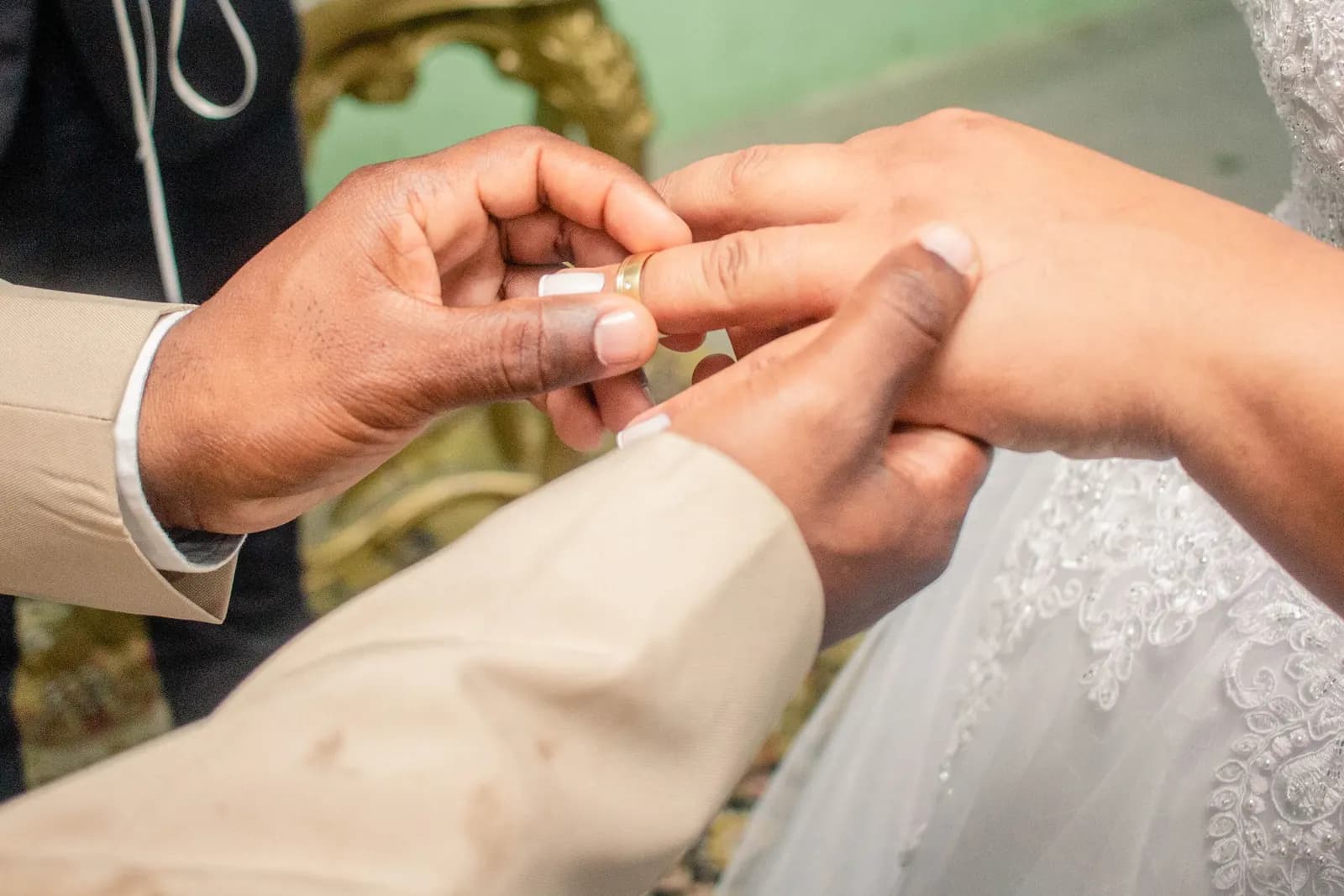
The mahr is understood in Islam as a right of the bride, and most couples treat it as a serious commitment. In the United States there is no single rule on mahr, so the court that hears a dispute decides. This guide explains in plain terms how some state courts have approached it. It is general information, not legal advice or a religious ruling.
Courts use contract law, not religious law
When a divorcing spouse asks a US court to enforce a mahr, judges generally avoid deciding religious questions. Instead they ask whether the mahr is an agreement that can be enforced under the state's ordinary secular rules of contract and, in some states, premarital agreements.
If the answer is yes, the court can enforce it. If key terms are missing, unclear or unfairly obtained, the court may refuse. The result depends on how the mahr was written and the state where the case is heard.
This is a general trend rather than a guarantee. A Maryland court that surveyed other states' decisions noted, for example, that a Texas court found a mahr unenforceable as a premarital agreement because it did not satisfy that state's statutory requirements, and that a Massachusetts court deferred to a ruling already made by Iranian courts. A result in one state cannot be assumed in another.
Four cases to know
These are real decisions, which you can read on court websites or CourtListener. Each one turned on its own facts, and they do not bind courts in other states.
Odatalla v. Odatalla (New Jersey Superior Court, Chancery Division, 2002). A wife sought specific performance of a $10,000 mahr in a divorce. As described in the Maryland opinion below, the court held the mahr enforceable, calling it a simple contract between two consenting adults. Video evidence showed the families negotiating the amount and then writing and signing the agreement.
In re Marriage of Obaidi and Qayoum (Washington Court of Appeals, 2010). The court also treated the mahr as a prenuptial agreement under neutral contract principles, but held it unenforceable and reversed the trial court's judgment because there was no meeting of the minds on the essential terms. As the Maryland opinion describes it, the document had no term promising to pay or explaining when or why, the husband had been told about it about 15 minutes before it was signed, it was written in Farsi, which he could not read, and he had no chance to consult a lawyer.
Nouri v. Dadgar (Maryland Court of Special Appeals, April 7, 2020). The court held that a mahr can be enforced if its secular terms are enforceable under neutral contract principles, and that the right framework is the one for agreements between people in a confidential relationship, such as premarital agreements. The party trying to enforce the mahr has the burden of showing it is enforceable and not tainted by overreaching. The court vacated the trial court judgments and sent the cases back to apply that test.
Alulddin v. Alfartousi (Arizona Court of Appeals, filed June 27, 2023). The husband and wife signed an Islamic marriage contract before the marriage with a $15,000 offered dowry and a $10,000 postponed dowry payable when she demanded it. An imam, the wife's representative and two other witnesses also signed. The court affirmed a $25,000 judgment for the wife, treating the agreement as a premarital agreement.
Taken together, they show the pattern: courts are willing to look at a mahr as a contract, but they look closely at clarity, understanding and fairness. A mahr agreed at the last minute, in a language one spouse cannot read, and with no clear payment term, is the hardest to enforce.
None of these cases is a statement about Islamic law. They only show how the civil courts of those states handled the documents in front of them.
The prenuptial agreement angle
Several courts have compared the mahr to a prenuptial agreement. A prenup must usually meet state requirements, such as being voluntary, being fairly disclosed and, in some states, being in writing and signed. That is why a verbal promise or a vague line on a nikah certificate can be risky.
Some couples sign a separate civil prenuptial agreement that restates the mahr. A family lawyer in your state can tell you whether that is wise for you, and can explain how a mahr would sit alongside any rights to property or support.
Be aware that a prenuptial agreement can also affect other rights, so do not sign one casually. If the aim is only to record the mahr, a lawyer can help word it so that it does exactly that.
Why you should write the mahr down
The cases above point to the same practical lessons. A clear, written mahr helps both spouses and avoids later disputes. Consider these steps:
- State the amount or item exactly, such as a sum of money, and say what is paid now and what is deferred.
- Say when a deferred amount becomes due, for example on divorce, on demand or on a stated date.
- Write it in a language both people understand, or include a translation.
- Give both spouses time to read it and ask questions before the nikah day.
- Have it signed and dated by both spouses and the witnesses, and keep copies.
- Consider asking a lawyer to read it if the amount is large or the situation is unusual.
Mahr does not replace legal marriage
A mahr is only part of the picture. To be treated as spouses by the law, you still need a legal marriage in your state with a license, an authorized officiant and recording. Read our guide on whether a nikah is legally binding in the US for the basics.
Religious and legal questions are separate
For the religious side of the mahr, including what may be given and how it is agreed, please ask a scholar or imam you trust, since this guide does not give religious rulings. For the legal side, speak with a family law attorney in your state. If you are not sure what amount to consider, our mahr calculator can help you start the conversation with your family.
Many couples also keep the mahr written on the nikah contract and store a copy with their other important documents, since it may be needed years later.
A few common questions
Will a US court enforce my mahr?
Is a mahr the same as a prenuptial agreement?
Does a verbal mahr count?
Is the mahr part of the property division in divorce?
Can an imam draft a legally enforceable mahr?
Planning your nikah?
To plan your nikah with a clear mahr, request an imam through ImamConnect, a free matching service, and use the mahr calculator at /mahr-calculator to start the discussion.
Related guides
This guide is general information, not legal advice or a religious ruling. Laws and fees change and differ by state and county, so confirm the current rules with your county clerk, your imam, and where it matters, a qualified attorney.